Top Tips on How to Pay Off Bills Faster
Want to know how to pay off bills faster? You’re in the right place. This article will walk you through clear, actionable strategies to help you manage and reduce your debt quickly.
Key Takeaways
Assess your financial situation by listing debts, monthly bills, and checking credit reports to inform a debt repayment plan.
Create a detailed budget to track income and expenses, prioritize bills, and include funds for emergencies to avoid further debt.
Focus on paying off high-interest debts first using strategies like the avalanche method while considering debt consolidation for easier management.
Assess Your Current Financial Situation
Understanding your current financial situation is the first step towards financial freedom. Take a hard look at your total debt and the full scope of your financial obligations.
List all your monthly bills, outstanding balances, interest rates, and due dates. A comprehensive list or table can help organize your debts and prioritize payments. Also, check your credit report for accuracy to ensure all listed debts are legitimate and up-to-date.
Armed with this information, you’ll have a solid foundation to build your debt repayment plan, set realistic financial goals, and improve your money management skills.
Next, focus on creating a budget to manage your monthly expenses and accelerate your debt payoff journey.
Create a Detailed Budget
A detailed budget is your best ally against debt. Track your monthly income and expenses to identify areas for spending cuts, giving you a clear picture of your financial inflows and outflows.
Use tools like spreadsheets, online banking, and budgeting apps to track your finances. These tools help allocate funds towards essential expenses and debt repayment. Regularly adjusting your budget is key to preventing further debt and staying on track with your financial goals.
Include a cash reserve or emergency fund in your budget to cover unexpected expenses and avoid falling deeper into debt. Itemizing and prioritizing your expenses helps calculate minimum payments due on all your bills, ensuring a clear money management plan.
With your budget in place, focus on prioritizing which debts to tackle first.
Prioritize High-Interest Bills

High-interest debt, such as credit card balances, can quickly spiral out of control if not addressed promptly. Prioritize paying off high-interest loans to prevent debt from ballooning due to accumulating interest.
The avalanche strategy focuses on the debt with the highest interest rate first, minimizing the overall interest paid over time. List your debts from highest to lowest interest rates and direct extra payments towards the top item on your list. This approach can significantly reduce total interest paid.
Make minimum payments on lower-interest debts while channeling additional funds towards the highest-interest debt. Once it’s paid off, redirect those funds to the next highest debt, systematically reducing your most expensive loans for faster debt payoff.
Next, see how making more than the minimum payments can accelerate your debt repayment journey.
Make More Than Minimum Payments
Paying only the minimum on your credit card balances each month keeps you trapped in a cycle of debt. Minimum payments barely cover the interest charges, leaving the principal balance largely untouched. Break free by consistently making payments above the minimum amount due.
Extra payments reduce your principal balance faster, minimizing interest charges. Consider making multiple payments a month to manage credit card balances more effectively and accelerate debt reduction. Some lenders allow extra payments to be allocated directly towards the principal balance, speeding up loan repayment.
Next, discuss how consolidate debt can simplify your debt repayment process.
Consolidate Your Debts
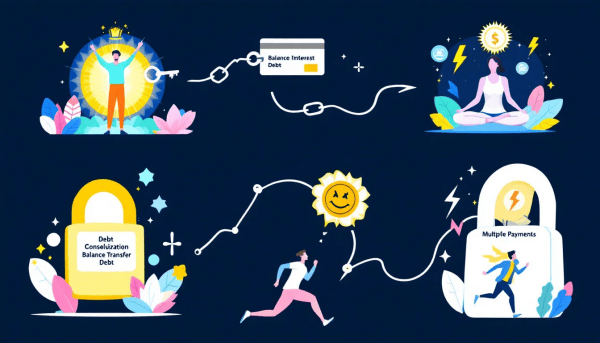
Debt consolidation can simplify managing multiple debts by combining them into one loan, often with a lower interest rate, potentially saving on interest. Options include personal loans and balance transfer credit cards.
Personal loans for consolidation often have fixed interest rates and a defined payoff schedule, making debt management easier. A personal loan can complement balance transfer credit cards, which may offer low rates for an introductory period, allowing faster debt payoff. However, be mindful of fees associated with balance transfers, as they can add to your costs.
Avoid racking up new credit card balances after consolidating your debts, as it can negate the benefits and lead back into debt. Always check for fees that could increase costs to ensure a financially sensible decision.
Next, see how automating your payments can help you stay on track.
Automate Your Payments
Automating your payments ensures you never miss a due date, helping avoid late fees and penalties. Most banks allow you to automate minimum payments or schedule larger payments for various types of bills.
Automating payments reduces the risk of missed monthly payments, maintaining a good credit score and avoiding additional charges. Tailor automatic payments to your preferences, choosing to pay the minimum monthly payments, a fixed amount, or the total balance each month.
Financial applications can further ensure the correct amounts are paid on time through automation. Next, discuss how to utilize any extra income wisely.
Utilize Extra Income Wisely

Extra money from bonuses, tax refunds, or side gigs can be powerful in paying off debt faster. Allocating these additional funds directly to your debt can drastically shorten the time needed to pay off debt.
Engage in freelance work or side gigs to boost your income and provide additional funds for debt payments. Allocating bonuses or tax refunds directly to your debt can lessen financial burdens and help achieve your financial goals more quickly.
Next, explore how negotiating with creditors can further aid in your debt repayment journey.
Negotiate with Creditors
Negotiating with creditors can effectively reduce your credit card debt burden. Many creditors, including credit card companies, are willing to offer lower interest rates or repayment plans to customers facing financial hardship.
Contact your creditors and provide details about your income, debt, and financial situation. Be firm in negotiations and highlight any external offers for lower rates from other issuers to strengthen your case. If a creditor is unwilling to lower your interest rate, consider asking for a temporary reduction instead.
Keep detailed records of negotiation attempts, and don’t hesitate to reach out again if your initial request is denied. Negotiating with creditors can potentially lower your monthly debt payments and help pay off your debt faster.
Next, explore ways to reduce monthly expenses to free up more funds for debt repayment.
Reduce Monthly Expenses
Reducing monthly expenses frees up more money for debt repayment. Identify unnecessary expenses and cut them out of your budget. Consider shopping at discount retailers to lower grocery costs and carpooling to reduce transportation expenses. Selling unwanted items can also generate extra cash for paying down debt.
Reducing monthly expenses accelerates debt payoff and moves you closer to financial freedom. Next, discuss when it might be necessary to seek professional help.
Seek Professional Help if Needed
If managing your bills and debts becomes overwhelming, consult a credit counselor. Reputable credit counseling agency provides personalized financial planning, budget creation, and debt management advice.
These certified professionals assess your entire financial situation before proposing solutions. Many credit counseling services are offered by non-profit organizations, ensuring lower fees and greater affordability.
If your debt feels unmanageable, seeking professional help can be a valuable step towards regaining control of your finances. Finally, let’s wrap up with a summary and some concluding thoughts.
Summary
In summary, paying off debt faster requires a strategic approach and disciplined money management. By assessing your financial situation, creating a detailed budget, prioritizing high-interest bills, and making more than minimum payments, you can accelerate your debt repayment journey.
Consolidating your debts, automating payments, utilizing extra income wisely, negotiating with creditors, and reducing monthly expenses are all effective strategies to help you achieve financial freedom. Remember, if you find yourself overwhelmed, seeking professional help from a credit counselor can provide the support you need. Stay committed to your financial goals, and you’ll be on your way to a debt-free life.
Frequently Asked Questions
What is the first step in creating a debt payoff plan?
The first step in creating a debt payoff plan is to assess your current financial situation by listing all your monthly bills, outstanding balances, interest rates, and due dates. This comprehensive overview will help you understand your debt and prioritize your repayment strategy effectively.
Why is it important to create a detailed budget?
Creating a detailed budget is crucial as it enables you to manage expenses effectively, prevent debt accumulation, and identify opportunities for savings. This proactive approach ultimately supports your financial stability and goals.
What is the avalanche method for debt repayment?
The avalanche method for debt repayment focuses on paying off debts with the highest interest rates first, which helps reduce the total interest paid over time. This strategic approach leads to faster debt elimination and greater financial efficiency.
How can automating payments help in debt repayment?
Automating payments helps in debt repayment by ensuring timely bill payments, which prevents late fees and penalties, ultimately supporting a healthy credit score. This consistent approach can significantly streamline your financial management and lead to faster debt reduction.
When should you seek professional help for debt management?
You should seek professional help for debt management when your bills and debts become overwhelming, indicating that assistance from a reputable credit counselor may be necessary.