
Debt Management Plan vs Debt Consolidation: Which One Works Best for You?
Debt management plan vs debt consolidation—what’s the best route for you? If you’re struggling with debt, choosing the right strategy can make all the difference. In this article, we’ll compare both options to help you decide which is better for your financial needs.
Key Takeaways
A Debt Management Plan (DMP) consolidates monthly payments into one and can lead to reduced interest rates but typically requires closing credit card accounts.
Debt consolidation combines multiple debts into a single loan, often with lower interest rates, but may lead to future debt accumulation if not managed carefully.
Choosing between DMPs and debt consolidation should be based on individual financial circumstances, including credit score, type of debt, and long-term financial goals.
What Is a Debt Management Plan?

A Debt Management Plan (DMP) is a specialized form of debt consolidation that simplifies your debt repayments by combining multiple monthly payments into one. A credit counseling agency sets up the plan by negotiating lower interest rates with your creditors and consolidating your debts into a single manageable payment. You then make one monthly payment to the counseling agency, which distributes the funds to your creditors.
Credit counselors aim to reduce your overall monthly payments by negotiating lower interest rates and halting collection efforts once the plan is accepted. Creating a budget that accommodates your living expenses while adhering to the DMP will determine its feasibility.
Typically, a small setup fee and monthly fees may be charged by credit counseling organizations.
Benefits of Debt Management Plans
Debt management plans offer several advantages, including reduced interest rates, simplified payments, and potential improvements in credit scores. Negotiating with creditors, credit counselors can secure lower interest rates, leading to significant savings on interest charges. This can be a huge relief, especially if you’re dealing with high-interest credit card debt.
A debt management plan can reduce anxiety associated with financial management by simplifying the payment process. It also makes it harder to accumulate more credit card debt or open new credit accounts, fostering better financial habits. Consistently making on-time payments during a DMP is likely to improve your credit score over time.
Drawbacks of Debt Management Plans
While DMPs can be beneficial, they have certain drawbacks. One major downside is that clients must typically close their credit card accounts. This means you won’t be able to use your credit cards or open new accounts during the plan. This restriction can be challenging, especially in emergency situations where credit might be needed.
Maintaining a consistent cash flow is crucial for staying on track with a DMP. If your income is unstable or you encounter unexpected expenses, sticking to the plan can become difficult. Weigh these factors carefully before committing to a DMP.
What Is Debt Consolidation?
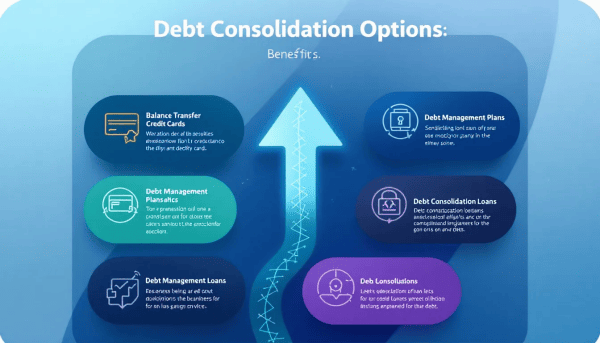
Debt consolidation is a strategy that combines various debts into a single loan, simplifying repayments. Essentially, it involves taking out an installment loan with a fixed term and fixed payments to pay off other loans. The main objective of debt consolidation is to make repayments less expensive by reducing overall interest payments.
Consolidating your debts reduces the total number of creditors you owe. This method allows you to pay off high-interest credit card debt at a lower interest rate, merging multiple credit card balances into one monthly payment to help you get out of debt.
Both debt consolidation and debt management plans aim to simplify monthly payments and reduce debt but employ different approaches.
Types of Debt Consolidation Loans
Debt consolidation loans can be categorized into secured and unsecured debt options. Common forms of these loans include personal loans, home equity lines of credit, and balance transfer credit cards. Personal loans are unsecured and don’t require collateral, while home equity lines of credit are secured by your home’s equity.
Balance transfer credit cards are another popular option for consolidating debt. They allow you to transfer multiple credit card balances to a single card, often with a lower interest rate or an introductory zero-percent APR period. Each type of debt consolidation loan has its own set of benefits and risks, so it’s important to choose the one that best fits your financial situation.
Pros and Cons of Debt Consolidation
A primary benefit of debt consolidation is the potential for a lower interest rate, which can make repayments more affordable. Simplifying your payments into one monthly payment through debt consolidation can also improve your financial health. This streamlined process makes it easier to manage your debts and potentially save money on interest charges.
However, debt consolidation has its risks. One potential drawback is that it can lead to more debt if you’re not careful. For example, consolidating credit card debts can free up available credit, tempting you to spend more.
Additionally, if you don’t qualify for a lower interest rate, debt consolidation may not be the cheaper option. Weigh these pros and cons before deciding on debt consolidation.
Comparing Debt Management Plans and Debt Consolidation

Both debt management plans and debt consolidation are effective strategies for managing debt, but they operate differently. A debt management plan consolidates various credit card debts into a single monthly payment, making repayment more straightforward. In contrast, debt consolidation involves combining multiple debts into a single loan or credit card, often with a lower interest rate.
One key difference is that debt consolidation loans usually require a good credit score to secure favorable terms, whereas debt management plans do not. This accessibility makes DMPs available to a broader range of individuals, particularly those with lower credit scores.
Which Debts Can Be Included?
Debt management plans typically address unsecured debts, such as credit card debt and personal loans. These plans help you manage and repay your unsecured debts by consolidating them into a single monthly payment. However, secured debts like mortgages are generally excluded from DMPs.
On the other hand, debt consolidation can include both secured and unsecured debts. This means you can consolidate a wider range of debts, including credit card balances, personal loans, and even secured debts like car loans or home equity lines of credit. This flexibility can be advantageous if you have a diverse portfolio of debts to manage.
Impact on Credit Scores
Debt management plans positively influence credit scores by streamlining repayment strategies and ensuring timely payments. When you make consistent, on-time payments under a DMP, your credit score is likely to improve over time. This can be a significant benefit for those looking to rebuild their credit.
Debt consolidation may initially lower your credit scores due to hard inquiries and changes in account age. Despite this initial dip, responsible management of the new credit can help restore and even improve your credit ratings over time. Consider these impacts when choosing between the two options.
Costs and Fees
Debt management plans may include setup and monthly fees from the credit counseling agency. These fees can vary depending on the agency and the services they provide. It’s essential to factor in these costs when evaluating a DMP as a debt relief option.
Debt consolidation loans can involve interest payments and potential fees associated with the loan. These costs can add up, so consider both the upfront and ongoing fees when deciding whether debt consolidation is the most cost-effective solution for your situation.
How to Choose Between Debt Management Plans and Debt Consolidation

Choosing between debt management plans and debt consolidation depends significantly on your circumstances and financial goals. Consulting a credit counselor can provide clarity on which debt relief methods suit your unique situation. Credit counselors help you assess your financial statements and create a payment plan that avoids bankruptcy.
Debt management plans typically take three to five years to resolve debts through a structured repayment process. Debt consolidation may be more suitable if you have a good credit score and want to simplify and potentially reduce interest payments.
Both options have merits, so consider your financial situation and long-term goals when making a decision.
Other Debt Relief Options
Besides debt management plans and debt consolidation, consider other debt relief options. Debt settlement companies involve negotiating with creditors to pay less than what is owed. This can be advantageous if you can demonstrate a cash payment in hand and are dealing with significantly past-due unsecured debts. Settling debts may have tax implications as the forgiven debt amount can be counted as taxable income.
Bankruptcy is another option but should be considered as a last resort after exploring other options such as debt settlement. Credit counseling can provide guidance and support for managing debt but is not discussed in detail here.
Each of these options has benefits and drawbacks, so carefully evaluate them before making a decision.
Summary
In summary, both debt management plans and debt consolidation offer viable solutions for managing debt, but they work differently and have their own sets of benefits and drawbacks. Debt management plans are ideal for those with lower credit scores looking to simplify payments and reduce interest rates, while debt consolidation is suitable for those with good credit seeking to streamline their debt into a single loan with potentially lower interest rates.
Choosing the right debt relief option depends on your individual financial situation and goals. Consulting with a credit counselor can provide valuable insights and help you make an informed decision. Remember, the goal is to find a solution that helps you manage your debt effectively and achieve financial stability.
Frequently Asked Questions
What is the main difference between a debt management plan and debt consolidation?
The main difference between a debt management plan and debt consolidation is that the former involves working with a credit counseling agency to streamline payments, whereas the latter entails securing a single loan to eliminate multiple debts. Thus, a debt management plan focuses on structured payment arrangements, while debt consolidation involves a new loan strategy.
Can I include secured debts in a debt management plan?
You cannot include secured debts in a debt management plan, as these plans are designed to address only unsecured debts like credit card debt and personal loans.
How does debt consolidation impact my credit score?
Debt consolidation may temporarily lower your credit score due to hard inquiries and changes in account age; however, with responsible management, it can enhance your credit in the long run.
Are there any fees associated with a debt management plan?
Yes, debt management plans often involve setup and monthly fees imposed by the credit counseling agency. It is essential to review these fees before committing to a plan.
What are the risks of debt consolidation?
The risks of debt consolidation include the possibility of accumulating more debt due to unchanged spending habits and the chance of not securing a lower interest rate, which may make it a less cost-effective solution. Thus, careful budgeting and analysis of options are crucial.