The Ultimate Guide: How to Choose a Credit Monitoring Plan
How do you choose a credit monitoring plan that fits your needs? In this guide, we’ll cover how to choose a credit monitoring plan by discussing the key features to consider, the pros and cons of free versus paid plans, and the importance of monitoring multiple credit bureaus. Stay tuned to make a well-informed decision.
Key Takeaways
Credit monitoring services provide continuous monitoring of credit reports to help detect and prevent identity theft, offering alerts about significant changes but not resolving errors.
Choosing between free and paid credit monitoring services depends on personal needs; while free services offer limited features, paid options provide comprehensive coverage and advanced identity theft protection.
When selecting a credit monitoring service, evaluate key features, user experience, pricing, and customer support to ensure the service effectively meets your financial security requirements.
Understanding Credit Monitoring Services
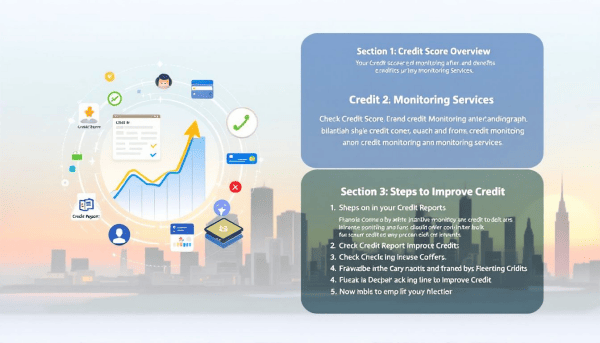
Credit monitoring services are a crucial tool in maintaining your financial health and preventing identity theft. They work by routinely checking the information on your credit reports, such as accounts, limits, age, payment history, and credit history. This proactive monitoring helps identify potential fraud and identity theft early, enabling prompt action.
One of the primary benefits of credit monitoring is the alerts you receive about changes to your credit reports. These alerts can inform you of new accounts opened in your name, changes in your credit limits, or even missed payments. However, while these services can alert you to potential issues, they cannot fix errors on your credit report.
Regularly checking your credit reports helps catch fraud warning signs early and prevents potential damage to your credit score. Tracking your credit rating online not only helps protect against identity theft but also ensures the accuracy of your credit score. This proactive approach allows you to understand how various factors affect your credit scores and take steps to improve your financial health through credit scoring.
Credit monitoring serves as a defense mechanism, signaling potential fraud rather than preventing it outright. By staying informed about your credit profile, you can maintain better control over your financial situation and address any issues promptly.
Key Features of a Credit Monitoring Service
Understanding the key features of credit monitoring services can help safeguard your financial health. Access to your credit report and score is fundamental, allowing you to track your credit health over time. Regular updates and monitoring can help you stay on top of any changes and take corrective actions when necessary.
Most credit monitoring services offer fraud alerts as a critical feature. These alerts notify you about suspicious activities in your credit reports, such as new account openings or significant changes to your existing accounts. Some services also provide alerts for unusual activities in your debit and credit card accounts, adding an extra layer of security.
Advanced credit monitoring services often include dark web monitoring and digital security tools. These features help identify if your personal information is being sold or misused online, allowing you to take preventive actions. Additionally, many services offer identity theft insurance and restoration assistance as part of their premium offerings, providing financial protection and support in case of identity theft.
Evaluate credit monitoring services for additional features such as identity protection options and dark web surveillance. These tools can significantly enhance your overall security and help prevent various forms of financial fraud, phishing, and other online threats.
Free vs. Paid Credit Monitoring Services
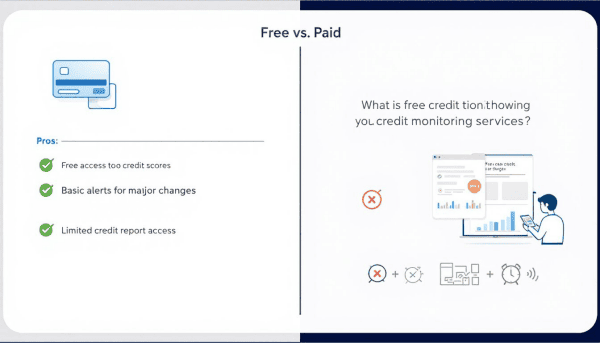
Credit monitoring services can be broadly categorized into free and paid options. Free credit monitoring services are often offered through financial institutions or platforms like Credit Karma, which provide free monitoring of TransUnion and Equifax with unlimited access to VantageScore credit scores and alerts, as well as free credit reports. These services allow users to access updated credit reports and scores regularly, typically every 30 days.
However, free credit monitoring services come with limitations. They often do not cover all three major credit bureaus, which can leave gaps in monitoring. Additionally, free services usually lack identity theft insurance and recovery services, which are crucial for comprehensive protection.
On the other hand, paid credit monitoring services generally provide more extensive coverage and additional features designed for enhanced security. These services typically monitor all three major credit bureaus, offering a complete view of your credit health. Subscribing to a paid credit monitoring service can provide peace of mind by ensuring dedicated support against identity theft and other financial threats.
When deciding between free and paid credit monitoring services, consider your needs and the level of protection you require. While free services can be a good starting point, paid options offer more comprehensive coverage and advanced features that can significantly enhance your financial security.
Three-Bureau vs. One-Bureau Monitoring
One crucial decision in credit monitoring is whether to choose a service that monitors one or all three major credit bureaus. Three-bureau monitoring provides a comprehensive view of your credit health by tracking your credit information across Experian, Equifax, and TransUnion. This thorough approach ensures that no significant changes go unnoticed, giving you a complete picture of your creditworthiness and your credit bureau status.
Opting for three-bureau credit monitoring means that you will be alerted to changes reported by any of the three major credit bureaus, offering a more robust defense against potential identity theft and fraud. This comprehensive coverage is particularly beneficial because not all creditors report to every bureau. Without monitoring all three, you might miss critical information that could affect your credit score.
Conversely, one-bureau monitoring typically costs less but lacks the thoroughness of tracking all three major credit bureaus. While it can provide some level of protection and is more affordable, it leaves gaps that could be exploited by fraudsters. Many credit monitoring services offer the ability to monitor multiple credit bureaus under one plan, enhancing your overall credit oversight.
Your choice between three-bureau and one-bureau monitoring should depend on your budget and desired security level. However, for the most comprehensive protection, three-bureau monitoring is often the best choice.
Evaluating Identity Theft Protection Features
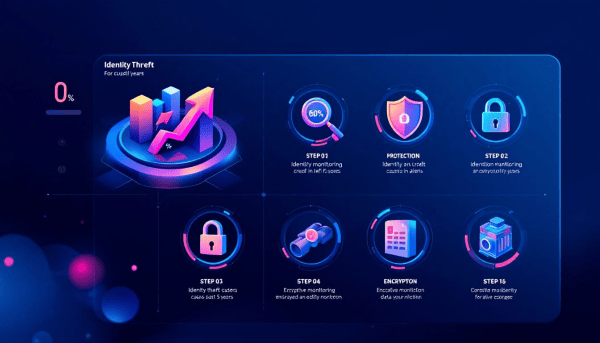
In the digital age, identity theft protection has become an indispensable feature of credit monitoring services. One of the key components of identity theft protection is dark web monitoring, which helps identify if your personal information is being sold or misused online. Services like IdentityForce and PrivacyGuard offer dark web scanning with their plans, providing an extra layer of security.
Another critical feature is identity theft insurance, which typically provides up to $1 million in coverage for stolen funds and expenses related to identity restoration. This insurance can cover various costs, including legal fees, lost wages, and the expenses associated with restoring your identity. Providers like IdentityForce, PrivacyGuard, and Experian IdentityWorks include identity theft insurance in their plans, ensuring comprehensive protection.
Identity theft protection services include monitoring personal information on the dark web. It also involves keeping an eye on court records, address change requests, and other relevant information. This holistic approach helps prevent identity theft and ensures that any suspicious activities are detected early. Aura, for example, offers identity theft insurance of at least $1 million with all plans, providing robust coverage for its users.
Prioritize credit monitoring services that offer comprehensive identity theft protection features. These tools are essential for safeguarding your personal and financial information in today’s interconnected world.
Pricing and Plans
Pricing and plans for credit monitoring services vary widely, typically ranging from $9 to $40 per month. For instance, Aura’s Individual plan costs $9.99 per month, making it an affordable option for those seeking basic protection. On the higher end, services like IdentityForce’s UltraSecure+Credit Individual plan cost $34.90 per month, offering a more comprehensive suite of features.
Some services, such as IdentityGuard, start at a lower price point of $7.50 per month, making them accessible to a broader audience. PrivacyGuard offers plans ranging from $9.99 to $24.99 per month, catering to different needs and budgets. Additionally, MyFICO starts at $29.95 per month, which is considered expensive compared to other alternatives but includes detailed credit reporting and monitoring tools.
Assess which pricing option best fits your budget when selecting a credit monitoring service. Consider what features you need and compare the costs of different plans. Services like Experian IdentityWorks offer a range of options from free to $34.99 per month, providing flexibility based on your financial situation.
Ultimately, choosing the right plan involves balancing cost with the level of protection and features offered. Assessing your needs and budget helps you choose a credit monitoring service that offers the best value.
User Experience and Customer Support
A user-friendly interface and excellent customer support are critical factors in choosing a credit monitoring service. A service with a user-friendly dashboard allows easy navigation and quick access to important credit information, enhancing your overall experience. The best credit monitoring services offer intuitive interfaces that make monitoring your credit straightforward and stress-free.
Accessing your credit information on multiple devices, including mobile and computers, provides added convenience. Many services also offer dedicated mobile apps that enhance user accessibility and allow you to monitor your credit on the go.
Customer support is another crucial aspect of user experience. Great customer service ensures that your queries are addressed promptly, providing peace of mind. Services offering live chat options, FAQs, and community forums make it easier for users to find answers to their questions and resolve issues quickly.
Prioritize credit monitoring services with user-friendly interfaces and robust customer support. These features can significantly enhance your experience and ensure you get the most out of your credit monitoring service.
Reading Reviews and Comparing Providers
Reading reviews and comparing providers is essential in selecting the best credit monitoring service. Reviews provide insights into user experiences, highlighting the strengths and weaknesses of different services. They can help you understand the real-world performance of a credit monitoring service and what you can expect.
Consider factors like the number of agencies monitored, report details, credit score improvement suggestions, ease of use, and identity protection offerings when comparing providers. These factors can significantly impact the effectiveness of the service and your satisfaction with it.
Some credit monitoring services provide detailed reports and alerts about suspicious activities, enabling you to address issues promptly. Look for providers that offer comprehensive coverage and robust alert systems to ensure you are well-informed about any changes to your credit.
Reliable sources for reviews and comparisons include consumer advocacy websites, financial blogs, and user testimonials. Reading reviews and comparing providers helps you make an informed decision to choose the best credit monitoring service for your needs.
Additional Tools and Resources
Many credit monitoring services offer additional tools and resources to help users understand and manage their credit effectively. One such tool is the credit score simulator, which demonstrates how different financial changes can affect your credit score. For example, Upgrade offers a credit score simulator that uses VantageScore® 3.0 to show potential impacts of financial decisions on your credit scores.
Utilizing these additional tools can enhance your understanding of credit and assist in making more informed financial choices. Services that provide educational resources, financial planning tools, and personalized advice can be particularly beneficial in helping you achieve your financial goals.
Some credit monitoring services also offer investment account monitoring and other financial management tools, expanding their utility beyond basic credit monitoring. These features can help you keep track of your overall financial health and make strategic decisions to improve your credit and financial stability.
Consider the additional tools and resources offered when choosing a credit monitoring service. These features can provide valuable insights and support, helping you manage your credit and finances more effectively.
How to Sign Up for a Credit Monitoring Service
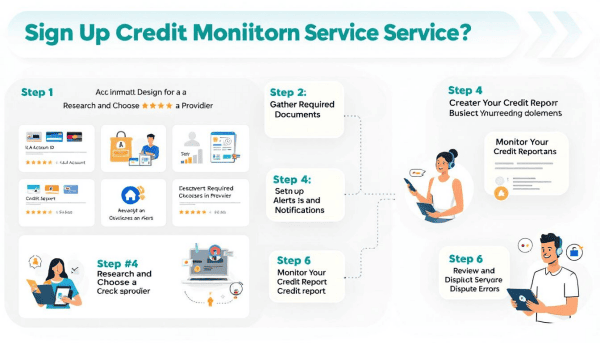
Signing up for a credit monitoring service is a straightforward process that begins with creating an account. You’ll need to provide personal information such as your name, address, and Social Security number to get started. This information is necessary for the service to access your credit reports and monitor your credit activity accurately.
Once your account is set up, the next critical step is to configure alerts. Setting up alerts ensures that you receive immediate notifications about any changes or suspicious activities on your credit report. These alerts can help you take prompt action to address potential issues and protect your credit health.
Most credit monitoring services offer step-by-step guides and support to help you through the sign-up process. They provide clear instructions on how to set up your account, configure alerts, and make the most of the service’s features. Taking the time to set up your account correctly can significantly enhance the effectiveness of your credit monitoring service.
Following these steps ensures you are well-protected against identity theft and credit fraud. Signing up for a credit monitoring service is an investment in your financial security and peace of mind.
Summary
Choosing the right credit monitoring service is a crucial step in safeguarding your financial health. By understanding the key features, comparing free and paid options, and evaluating identity theft protection, you can select a service that meets your needs and provides comprehensive protection.
Regularly monitoring your credit reports and scores can help you detect potential fraud early and take corrective actions to maintain a healthy credit profile. The additional tools and resources offered by many services can further enhance your understanding of credit and support your financial goals.
Investing in a good credit monitoring service is a proactive measure to protect your financial future. Take control of your credit today and ensure that you are well-prepared to address any challenges that may arise.
Frequently Asked Questions
What are credit monitoring services?** **?
Credit monitoring services are designed to track your credit report and notify you of any changes or suspicious activities. They are essential for maintaining financial health and protecting against identity theft by offering timely warnings of potential fraud.
Are free credit monitoring services effective?** **?
Free credit monitoring services are effective for basic monitoring and updates of your credit reports and scores, but they typically do not provide the comprehensive coverage or identity theft protection that paid services offer.
Why is three-bureau monitoring important?** **?
Three-bureau monitoring is crucial as it provides a comprehensive overview of your credit health, ensuring that any significant changes are detected promptly. This level of monitoring enhances protection against identity theft and fraud, offering more robust security than monitoring a single bureau.
What features should I look for in a credit monitoring service?** **?
In selecting a credit monitoring service, prioritize features like access to credit reports and scores, fraud alerts, dark web monitoring, identity theft insurance, and robust security tools. These elements are essential for effectively managing and protecting your credit profile.
How much do credit monitoring services cost?** **?
Credit monitoring services typically range from free to approximately $40 per month, with options like Aura starting at $9.99 per month and comprehensive plans like IdentityForce's UltraSecure+Credit costing $34.90 per month. It is essential to choose a plan that aligns with your specific monitoring needs and budget.