
Mastering the Budgeting Process: Essential Steps for Success
Looking for a clear budgeting process to manage your finances efficiently? This article gives a step-by-step guide to help you create and maintain a budget, ensuring you allocate resources wisely and achieve your financial goals.
Key Takeaways
The budgeting process is essential for tactical implementation, operational planning, and effective cash flow management, requiring regular updates to adapt to changing conditions.
Key steps in budgeting include reviewing past budgets, setting measurable objectives, identifying costs, forecasting finances, and monitoring performance for continuous improvement.
Leveraging technology, including AI and automation, enhances budgeting efficiency by improving accuracy, reducing manual tasks, and allowing focus on strategic financial decisions.
Understanding the Budget Process
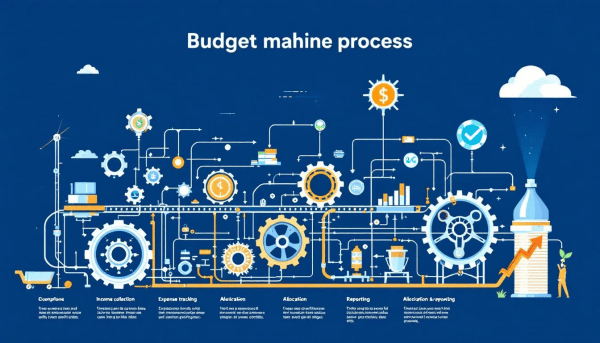
The budgeting process is more than just a financial exercise; it’s a tactical implementation of your business plan. It aids in operational planning and problem-solving, making it a cornerstone for effective cash flow management. Careful allocation of financial resources enables businesses to prioritize their goals and stay on track to achieve them.
A well-structured budget serves as a roadmap, guiding an organization’s financial activities over a set period. This involves reviewing past budgets to understand financial trends, planning for future spending, and setting realistic goals. The process is iterative and requires regular updates to respond to changing business conditions and market dynamics, including operating budgets.
Importance of Effective Budgeting
Effective budgeting is crucial for a business’s survival and growth. It provides a detailed framework to set realistic goals, allowing teams to tailor their work based on defined targets for costs and revenues. This ensures that financial resources are allocated efficiently and that spending aligns with the company’s strategic objectives.
Moreover, budgeting helps many businesses anticipate market changes and adjust their financial resources accordingly. It fosters collaboration among various departments, integrating finance teams with the overall business environment strategy. This collaborative approach ensures that all parts of the organization work towards common financial goals, enhancing accountability and performance.
Key Steps in the Budgeting Process

Mastering the budgeting process involves a series of systematic steps to forecast income and expenses, align with management, and enforce controls to prevent overspending. Each step builds upon the previous one, creating a comprehensive approach to financial planning and resource allocation.
Step 1: Reviewing Past Budgets
The first step in the budgeting process is to review past budgets. This involves analyzing historical budgets to identify spending patterns and financial trends. Comparing actual spending to planned expenses provides valuable insights for future financial planning.
Reviewing past budgets sets the foundation for creating a new budget. It helps in understanding where resources were effectively utilized and where adjustments are needed. This analysis is crucial for making informed financial decisions and setting realistic goals for the next fiscal year.
Step 2: Setting Strategic Objectives
The next critical step involves setting strategic objectives. The company’s strategic objectives should be clear and measurable, aligning with market conditions and organizational strategies. Financial goals need to be SMART to enhance accountability and track progress effectively:
Specific
Measurable
Achievable
Relevant
Time-bound
Establishing achievable goals is essential to maintain motivation and ensure that every department works towards common objectives. This alignment helps in measuring performance effectively and ensures that the budget reflects the company’s priorities.
Step 3: Identifying Fixed and Variable Costs
In this step, it’s important to distinguish between fixed and variable costs. Fixed costs are expenses that remain constant regardless of business activity, such as rent, employee salaries, and regular bills. Understanding these fixed expenses provides a baseline for budgeting and helps identify controllable cost expenses.
Variable costs, on the other hand, fluctuate with business activity. These can include seasonal staff, marketing campaigns, and software upgrades. The key difference is that variable costs can be adjusted based on levels of business activity, while fixed costs remain unchanged. Additionally, understanding variable expenses is crucial for effective budgeting.
Step 4: Forecasting Revenue and Expenses
Forecasting revenue and expenses is a crucial part of the budgeting process. It requires a thorough understanding of income streams and market dynamics. Listing core products, expected income volumes, and pricing can aid in creating a realistic revenue forecast.
The budget should reflect company priorities by tying expenditure back to overall goals. This budget based involves estimating extra discretionary spending to avoid unexpected annual budget overruns and ensuring that all expense drivers are accounted for in the budget plan.
Calculating existing revenue after reviewing past budgets is essential to determine future expense capabilities. Using Key Performance Indicators (KPIs) can help align resource allocation with organizational goals, making the budgeting process more effective.
Step 5: Allocating Resources
Effective resource allocation involves collaboration and input from team members to align funding with priorities. A budget manager plays a crucial role in distributing funds across departments to drive growth and achieve strategic objectives.
Involving various departments in the allocation process ensures efficient resource use and alignment with the company’s goals. Such collaboration aids in making informed financial decisions and optimizing resource utilization.
Step 6: Implementing the Budget Plan
Implementing the budget plan requires establishing monitoring systems and clear approval processes. These systems ensure that the budget is executed successfully and that spending aligns with the plan.
AI tools can automate repetitive budgeting tasks and provide real-time insights, making the process more efficient. This technological integration can enhance accuracy and allow budget managers to focus on strategic financial decisions.
Step 7: Monitoring and Adjusting
Monitoring and adjusting the budget is an ongoing process. To track financial performance effectively:
Monitor financial performance regularly, with checks on a monthly basis for overarching insights.
Conduct weekly oversight for cash flow.
Establish monitoring systems before implementing a new budget.
Budgets should be reviewed at least quarterly to assess performance and update assumptions accordingly. Documenting insights and lessons learned during budget reviews is crucial for continuous improvement.
Flexible budgets enable swift adjustments in response to changes in income or unexpected expenses. Creating adaptable budgets allows organizations to respond quickly to market fluctuations and emerging opportunities.
Roles and Responsibilities in Budget Management

Clear roles and responsibilities are crucial for the budgeting process to succeed. The effectiveness of this process relies significantly on how well these roles are defined within the organization. Key players include senior management, finance teams, and budget managers, who all play vital roles throughout the organization.
Effective budgeting creates a structured framework for collaboration, ensuring that all teams align their financial resources with business priorities.
Financial Leadership
CFOs and finance teams:
Set the budget strategy and evaluate market conditions.
Create clear steps defining approval limits and procedures for approving expenses.
Ensure appropriate communication of budget plans so individuals are held accountable for implementing the budget.
The accounting team tracks financial records, monitors spending, and ensures accurate account performance records.
Department Managers
Department managers are responsible for their specific budget areas and must identify any financial issues. Communication is key to ensuring team leads understand their spending limits and reporting processes.
Teams should know how much they’re allowed to spend and how to report their spending. Operations managers provide insights on resources, capacity, and productivity needs during the budget process.
Cross-functional Collaboration
Collaboration among different teams enhances accountability and clarity during the budgeting process. Input from team members and their expertise should guide decision-making in the budgeting process.
This collaborative approach helps in deciding which projects or priorities get funding.
Best Practices for Successful Budgeting

Implementing best practices for successful budgeting can make a significant difference in achieving financial goals. A structured detailed budget strategy helps in tracking financial goals effectively.
Using accurate data, setting realistic goals, and building flexibility are key principles for effective business budgeting.
Using Accurate Data
Using current data in budgeting prevents costly mistakes and supports smarter decision-making, guiding us in the right direction. Utilizing real-time data helps in assessing financial conditions accurately.
Predictive analytics from AI can enhance budgeting and forecasting in several ways:
Enhancing the accuracy of forecasting by analyzing past data and identifying trends.
Alerting users to anomalies in budget spending, helping to mitigate financial risks promptly.
Integrating AI solutions with existing financial systems in a straightforward manner, enhancing overall budgeting capabilities.
Setting Realistic Goals
Establishing specific financial objectives is crucial when creating a budget. A successful budget requires identifying both short-term and long-term financial goals to ensure that spending aligns with overall financial priorities. Goals should be measurable and time-bound so that progress can be tracked effectively throughout the budgeting period.
Regularly revisiting and adjusting savings goals and long term goals can help ensure that they remain aligned with changing circumstances and financial realities.
Building Flexibility
A budget should not be set in stone because markets change; unexpected events and challenges arise. It is recommended to establish an emergency fund to prepare for unexpected expenses in budgeting and to manage your money effectively.
Organizations should study the budgeting process for flexibility if they are taking on new projects. The purpose of a capital budget is to allocate funds, control risks, and set priorities.
Leveraging Technology for Budgeting Efficiency

Automation can transform the budgeting process by improving efficiency, accuracy, and scalability. Automated solutions can close your books 25% faster, thereby streamlining operations.
Incorporating technologies like artificial intelligence can significantly improve budgeting accuracy by reducing manual tasks. These technological advancements allow budget managers to focus on strategic financial decisions, enhancing overall budgeting capabilities.
Summary
This section will summarize the key points discussed in the blog post and provide an inspiring conclusion to motivate the reader to implement the learned strategies.